A great deal of cargo damage, and many unexpected freight charges, can be traced back to packing. A carton that collapses at the bottom of a stack, a pallet that shifts inside a container or a crate held at destination for untreated wood can turn a routine shipment into a claim. Knowing how to pack cargo for shipping protects your goods, keeps inspections simple and stops you paying to ship empty space.
This export packing guide covers the essentials for sea and air freight to and from the UAE. You will learn how to choose packaging, build stable pallets, secure a container, keep moisture out, label correctly and handle dangerous goods, and how packing affects the volume and weight you are charged for.
How to pack cargo for shipping: choose the right packaging
Packaging should suit the weight, fragility and value of the goods, and the journey ahead. Sea cargo can face weeks of stacking, vibration and humidity, while air cargo is handled quickly and often, sometimes by hand.
- Cartons: use new double- or triple-wall corrugated boxes, as reused cartons lose much of their strength. Fill gaps so the contents cannot move, and tape every seam.
- Wooden crates and cases: suit machinery, heavy parts and fragile items. Fix the goods to the base and leave access for forklifts.
- Pallets: make handling faster and safer. Choose a size that suits the container or aircraft, and check the pallet's load rating.
ISPM 15 for wooden packaging
Solid wood pallets, crates and dunnage used in international trade generally have to meet ISPM 15. The wood must be heat-treated or fumigated and carry the IPPC stamp, otherwise the shipment can be held, treated or sent back at extra cost. Plywood, plastic and other processed materials are exempt, which makes them a simple alternative.
Palletise and wrap for stability
A well-built pallet moves as one unit and survives forklifts, stacking and turbulence. A poorly built one sheds cartons at the first bump.
- Stack cartons squarely with no overhang. Overhanging edges crush easily and enlarge the footprint you pay for.
- Put the heaviest cartons at the bottom and keep the top flat and level.
- Use corner boards and strapping for heavy or tall loads.
- Stretch-wrap the whole load, including the pallet base, so cartons and pallet cannot separate.
- Check height limits before you build, because aircraft holds and container doors restrict how tall a pallet can be.
Load and secure the container
For FCL shipments, how the container is loaded matters as much as how each item is packed. Spread weight evenly across the floor, keep heavy items low and central, and never exceed the container's maximum payload. Under SOLAS rules, every packed export container also needs a verified gross mass (VGM) before it is loaded on a vessel.
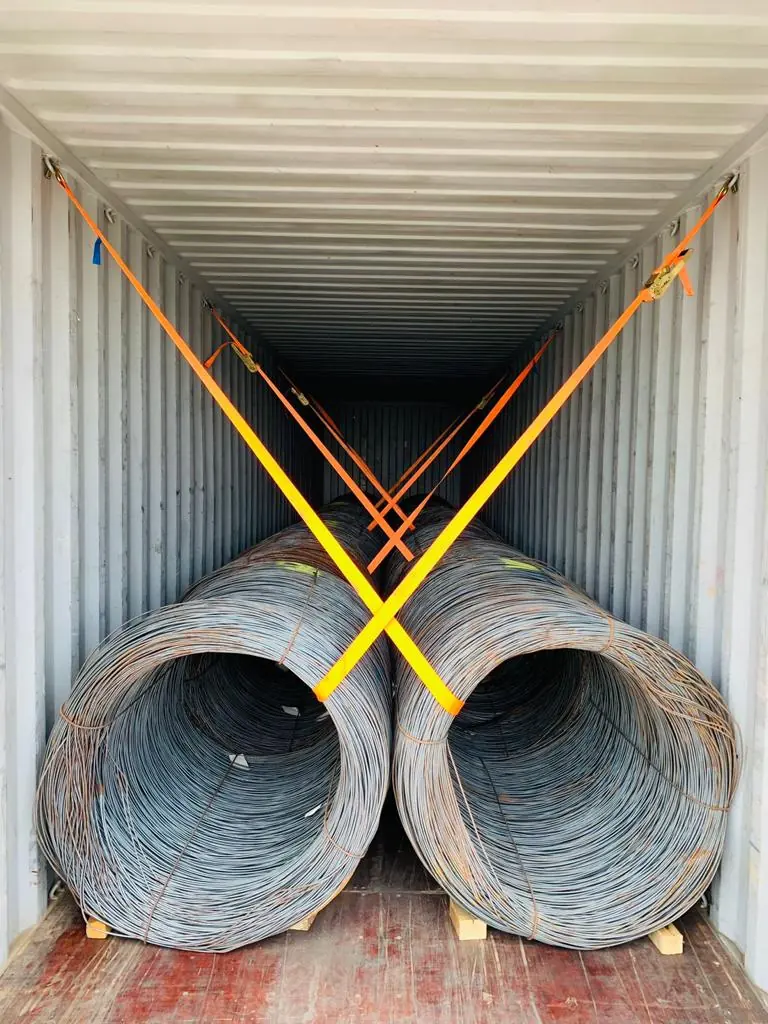
Fill empty spaces with dunnage such as airbags, timber bracing or cardboard fillers, and lash heavy items to the container's lashing points with straps rated for the load. Cargo that can shift even slightly can work loose over a long voyage.
Cargo moving through LCL consolidation needs extra care, because it is handled several times and stacked with other shippers' goods. Pack it to survive both.
Keep moisture out
Temperature swings between day and night, or between origin and destination, can cause condensation inside a container, often called container rain. The result is mould, rust, stained labels and collapsed cartons.
- Use desiccant bags or poles sized for the container and the length of the voyage.
- Load only dry goods on dry pallets, because damp timber releases moisture as it warms.
- Wrap sensitive goods in moisture barrier film or bags.
- Use corrosion-inhibiting (VCI) packaging for metal parts.
Label clearly and treat dangerous goods separately
Every package should show the consignee, destination, package number (for example, 3 of 20), gross weight and dimensions. Add handling marks such as this way up, fragile or do not stack where relevant, label at least two sides and remove old labels from reused crates or pallets. Marks must match the packing list and commercial invoice, because mismatches slow customs checks.
Dangerous goods are a separate discipline. Perfumes, aerosols, paints, many chemicals and lithium batteries are commonly regulated as dangerous goods. They must be correctly classified, packed in UN-approved packaging, marked, labelled and declared under the IMDG Code for sea or the IATA Dangerous Goods Regulations for air. Never describe them as general cargo or pack them without specialist guidance.
How packing changes what you pay
Freight is charged on space as well as weight. Sea LCL is charged per CBM (1 CBM = 1 m³) or per 1,000 kg, whichever is greater. Air freight is charged on actual or volumetric weight, whichever is greater, with volumetric weight calculated as L × W × H in cm ÷ 6,000. The illustrative example below shows 20 cartons of the same goods, 280 kg gross in total, packed two ways.
| Measure | Original cartons | Right-sized cartons |
|---|---|---|
| Carton size | 60 × 40 × 50 cm | 50 × 40 × 45 cm |
| Total volume (sea LCL basis) | 2.4 CBM | 1.8 CBM |
| Air chargeable weight (volumetric) | 400 kg | 300 kg |
Right-sizing the cartons cuts both the chargeable volume and the chargeable air weight by a quarter, with no change to the goods. Check your own figures with our CBM and volumetric weight calculator, and see how to reduce freight costs for more ways to save.
Key takeaways
- Match strong, new packaging to the goods and the journey.
- Use ISPM 15 treated or processed wood for pallets, crates and dunnage.
- Palletise squarely, wrap fully and avoid overhang.
- Brace, lash and fill voids in containers, and declare an accurate VGM.
- Control moisture, label clearly and leave dangerous goods to specialists.
- Right-size cartons, because you pay for volume as well as weight.
Getting packing right before cargo leaves the warehouse costs far less than dealing with damage, rejected pallets or re-weighed shipments afterwards. If you are unsure how to pack cargo for shipping on a particular route, Belsped's team in Dubai can talk through the requirements, including for hazardous and oversized items, and move the shipment by sea freight or air. Contact us with your cargo details for advice and a quote.
Frequently asked questions
Solid wood pallets, crates and dunnage used in international shipping generally need to meet ISPM 15, which means heat treatment or fumigation and an IPPC stamp. Untreated wood can lead to delays, treatment or rejection at destination. Plastic pallets and processed wood such as plywood are exempt.
Use desiccant bags or poles sized for the container and the voyage, load only dry goods on dry pallets, and wrap sensitive items in moisture barrier film. Metal parts benefit from corrosion-inhibiting packaging. Together, these steps reduce the condensation known as container rain.
Yes. Sea LCL is charged per CBM or per 1,000 kg, whichever is greater, and air freight is charged on actual or volumetric weight, whichever is greater. Oversized cartons and loosely built pallets increase both, so right-sizing packaging can lower your freight bill without changing the goods.
Written by the Belsped Shipping team
Freight-forwarding specialists at Belsped Shipping Services LLC in Dubai, with 21 years of experience in sea, air and land logistics. Meet the team or ask us a question.