Most cargo that arrives in the UAE by sea or air finishes its journey on a truck, and plenty of regional trade never leaves the road at all. The trucking services UAE importers, exporters and distributors depend on do much more than supply a vehicle and a driver: they match the truck to the load, plan the route and handle the paperwork at every border.
This guide sets out the main benefits of hiring a professional trucking service, explains when full truckload (FTL) or less-than-truckload (LTL) makes more sense, and walks through a typical cross-border job. It is written for businesses moving cargo within the UAE or by road to Saudi Arabia, Oman, Qatar, Bahrain and Kuwait.
The top benefits of a professional trucking service
1. Flexible scheduling and routing
Trucks do not wait for a vessel or flight schedule. A load can leave as soon as it is ready, collect from more than one supplier or deliver to several sites in one run. That flexibility helps when production dates shift or a customer brings an order forward.
2. Door-to-door delivery with fewer handovers
Road freight collects from your premises and delivers straight to the consignee. Fewer handovers mean less handling, a lower risk of damage and a clearer line of responsibility if something goes wrong.
3. Lower cost than air for regional moves
Within the GCC, road freight is usually far cheaper than air freight, and the difference in transit time is often only a matter of days. Unless the cargo is genuinely urgent, trucking is typically the more economical choice for regional distribution.
4. The right equipment for heavy and oversized cargo
Professional providers can supply flatbeds, low-bed trailers, curtain-siders, box trucks and refrigerated units, and arrange cranes and forklifts for loading and unloading. Heavy machinery and out-of-gauge items need route planning and, in some cases, permits or escorts, which an experienced team organises in advance. Very large or complex moves may be better handled as project cargo.
5. Documentation and border formalities handled
Cross-border trucking needs export and import declarations, a commercial invoice, a packing list and often a certificate of origin. Cargo passing through a third country, such as a load from the UAE to Kuwait via Saudi Arabia, also needs transit formalities. A provider with in-house documentation and customs clearance keeps trucks moving instead of waiting at the border.
6. Tracking and clear communication
You should know when a truck has loaded, when it has crossed the border and when it has delivered. A good provider reports at each of these milestones, flags delays early and shares proof of delivery once the consignee has signed.
7. Insurance and safety
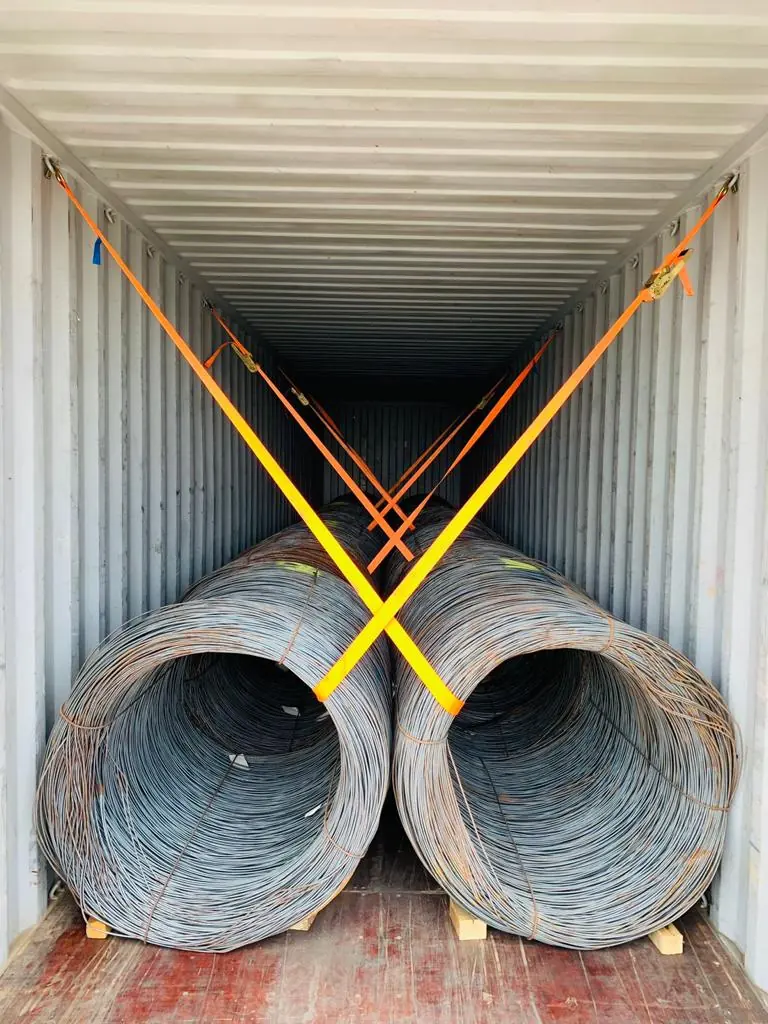
A carrier's liability is usually limited, so cargo insurance is the way to protect the full value of your goods against loss or damage in transit, and a professional provider can arrange it. Safety matters too: correct load securing, respect for weight limits and proper handling of dangerous goods all reduce the risk of accidents and claims.
FTL vs LTL: which suits your cargo?
Most providers offer both options, so one of the first decisions is whether to book a whole truck or share space with other shippers. The table below compares the two.
| Factor | Full truckload (FTL) | Less-than-truckload (LTL) |
|---|---|---|
| What you book | The whole truck, used only for your cargo | Part of a truck shared with other shippers |
| Best for | Large volumes and heavy, high-value or fragile loads | A few pallets or smaller consignments |
| Pricing | A fixed price per truck | Based on the space or weight your cargo uses |
| Transit time | Usually faster, with a direct run | Can be longer because of consolidation and extra stops |
| Handling | Loaded once and unloaded once | More handling at pickup and delivery points |
As a rough guide, once a load fills around half a truck or more, it is worth asking for both FTL and LTL prices and comparing them. Accurate weights and dimensions make those quotes reliable, and our CBM calculator can help you work them out.
How a cross-border trucking job works
The illustrative sequence below shows a typical FTL shipment from Dubai to a customer in Saudi Arabia. Timings vary with the route, the border crossing and the cargo.
- Booking: you confirm the cargo details, addresses and dates, and a suitable truck is assigned.
- Loading: the cargo is loaded, secured and checked against the packing list.
- Export clearance: the export declaration is filed and the truck leaves with its documents.
- Border crossing: customs at the exit and entry points check the paperwork and may inspect the cargo.
- Import clearance and delivery: any duties and taxes are settled, the goods are released and delivered, and proof of delivery is shared.
Delays usually come from missing or inconsistent documents, so it pays to have the invoice, packing list and certificate of origin checked before the truck is loaded. Checking them at the start is far quicker than correcting them at the border.
Checklist: choosing trucking services UAE-wide and across the GCC
Not every provider is equipped for every load or route. Before you book, put these questions to the provider:
- Can you offer both FTL and LTL, plus container transport to and from Jebel Ali?
- Do you have the right equipment for this cargo, including cranes or forklifts if needed?
- Are export, import and transit documents handled in-house?
- Do you run trucks regularly on this route, for example to Saudi Arabia or Oman?
- Will there be milestone updates and proof of delivery?
- Can you arrange cargo insurance, and what does it cover?
Key takeaways
- Professional trucking services in the UAE offer flexibility, door-to-door delivery and lower costs than air for regional moves.
- Choose FTL for large, urgent or sensitive loads and LTL for smaller consignments.
- Specialised equipment and careful planning make heavy and oversized moves safer.
- In-house documentation and clearance help prevent delays at GCC borders.
- Insist on milestone updates, proof of delivery and suitable insurance.
Belsped provides trucking services UAE-wide and across the GCC, including FTL and LTL, container transport and heavy equipment moves. Cranes and forklifts can be arranged where needed, cargo insurance is available, and documentation and clearance are handled in-house. Find out more about our land transport services or contact our team for a quotation.
Frequently asked questions
With full truckload (FTL), you book the entire truck for your cargo, which usually means a direct run and less handling. With less-than-truckload (LTL), your goods share space with other shippers' cargo and you pay for the space used, which is often more economical for smaller loads.
Yes, road freight regularly connects the UAE with Saudi Arabia, Oman, Qatar, Bahrain and Kuwait. Each crossing needs the right export, import and, where relevant, transit documents, so it is best handled by a provider with experience on the route.
It is strongly recommended. A carrier's liability is usually limited and may not cover the full value of your goods, so cargo insurance protects you against loss or damage in transit. A professional trucking provider can arrange cover as part of the booking.
Written by the Belsped Shipping team
Freight-forwarding specialists at Belsped Shipping Services LLC in Dubai, with 21 years of experience in sea, air and land logistics. Meet the team or ask us a question.