A warehouse is much more than a place to park cargo. Every pallet that arrives goes through a warehouse operations process designed to keep it safe, traceable and ready to move the moment it is needed. When that process works, stock figures are accurate, orders leave on time and damage is rare. When it does not, the problems show up as missing cartons, late deliveries and write-offs.
This article takes you on a tour of how a modern logistics warehouse works, stop by stop, with our facilities near Jebel Ali Port, Dubai World Central (DWC) and Dubai International Airport as the backdrop. You will see what happens at each stage, from receiving to dispatch, and what to look for when choosing a warehousing partner in the UAE.
Stop 1: Receiving and inspection
The tour starts at the loading bay. Good receiving begins before the truck arrives: the client sends an advance notice of what is coming, how many packages and when, so the team can plan labour, equipment and space.
When the cargo arrives, it is unloaded and checked against the packing list. The team looks for:
- the correct number of pallets, cartons or pieces
- visible damage, such as crushed corners, leaks or torn wrapping
- intact container seals with numbers that match the documents
- clear, readable labels and item codes
Any shortage or damage is recorded, photographed and reported to the client straight away. That record matters if an insurance claim or a dispute with a supplier follows later.
Stop 2: Put-away and storage
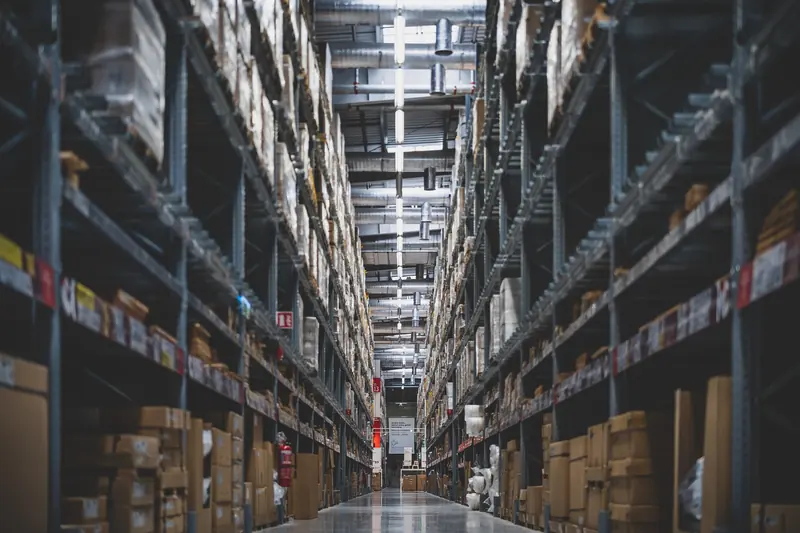
Once received, goods move to a storage location chosen for their size, weight, handling needs and how often they will be picked. Fast-moving items usually sit closest to the dispatch area, while slow movers go higher up or further back.
Different cargo needs different storage. The table below summarises the main options.
| Storage type | Best suited to | Points to consider |
|---|---|---|
| Pallet racking | Palletised stock across many product lines | Pallets must be sound and within the rack's weight limits |
| Bulk or floor storage | Large volumes of a few products, or oversized items | Uses more floor space; stacking height depends on packaging strength |
| Shelving | Small parts, cartons and e-commerce items | Well suited to picking individual units |
| Ambient storage | General cargo that tolerates normal warehouse conditions | Check the goods' sensitivity to heat and humidity in UAE summers |
| Temperature-controlled storage | Food, pharmaceuticals, cosmetics and other sensitive goods | Agree the required temperature range and how it is monitored |
Businesses can choose dedicated space reserved for their own stock, or shared warehousing alongside other clients' goods. Shared space usually suits smaller or seasonal volumes.
Stop 3: Inventory control
Accurate stock records are the backbone of the warehouse operations process. Every movement, whether receiving, put-away, transfer or dispatch, should be recorded against a specific location, so any item can be found quickly and the figures always match what is on the shelf. Good inventory control usually includes:
- Regular cycle counts of selected locations, rather than relying on one annual stock-take
- Stock rotation rules such as first in, first out (FIFO), or first expired, first out (FEFO) for goods with a shelf life
- Batch and serial number tracking where traceability matters
- Stock reports that let you plan reorders without visiting the warehouse
Stop 4: Picking, packing and value-added services
Picking and packing
When an order comes in, the team picks the items from their locations, checks them against the order and packs them for the journey ahead. Goods leaving by sea or air need export-grade packing, secure palletisation and clear shipping marks, while local deliveries may only need sturdy cartons and labels. Each shipment is then weighed and measured so the documents are accurate. To check volumes yourself, use our CBM and volumetric weight calculator.
Value-added services
Many warehouses do more than store and ship. Handling extra tasks on site avoids a trip to another facility and gets products to market faster. Typical value-added services include:
- labelling and relabelling to meet market or retailer requirements
- kitting, where components are assembled into ready-to-sell sets
- repacking bulk shipments into smaller units
- palletising, shrink-wrapping and quality checks before dispatch
Stop 5: Dispatch and distribution
The last stop is the outbound bay. Orders are staged by route or vehicle, checked a final time and loaded so that the first drop comes off first. The delivery note, invoice and any export or customs documents travel with the cargo or are sent ahead electronically.
Location matters here. Facilities near Jebel Ali Port, DWC and Dubai International Airport shorten the transfer to the vessel or aircraft, and the road network links them to the rest of the UAE and the wider GCC. Local and cross-border deliveries then continue by land transport.
Safety and security throughout the warehouse operations process
Safety is not a separate stop on the tour; it runs through every stage. In a well-run warehouse you should see:
- clearly marked aisles and walkways, kept free of obstructions
- forklifts and other handling equipment operated only by trained staff
- racking that is inspected regularly and loaded within its rated limits
- fire safety equipment that is accessible and maintained
- hazardous goods segregated and handled according to their classification
Security matters just as much, and our warehouses are protected by round-the-clock security. When you visit any warehouse, ask who can access the stock, how goods are protected outside working hours and how incidents are reported to clients.
Key takeaways
- The warehouse operations process runs from receiving and inspection through put-away, inventory control, picking and packing to dispatch.
- Careful receiving checks protect you if damage or shortages come to light later.
- Choose storage that matches your cargo, including temperature-controlled space for sensitive goods.
- Value-added services such as labelling, kitting and repacking can save time and transport costs.
- Safe working practices and 24/7 security should be visible throughout any warehouse you consider.
Belsped offers dedicated and shared warehousing near Jebel Ali Port, DWC and Dubai International Airport, with temperature-controlled and normal storage, value-added services and round-the-clock security. Find out more about our warehousing facilities or contact our team to discuss your storage needs.
Frequently asked questions
The core stages are receiving and inspection, put-away and storage, inventory control, order picking and packing, and dispatch. Many warehouses also offer value-added services such as labelling, kitting and repacking between storage and dispatch.
Dedicated warehousing reserves a defined space for one client's stock, which suits steady, larger volumes. Shared warehousing places several clients' goods in the same facility, which typically suits smaller or seasonal volumes because you use only the space you need.
Food, pharmaceuticals, cosmetics, some chemicals and some electronics can deteriorate in high heat or humidity, which is a real risk during UAE summers. If the product label or the supplier specifies a storage temperature range, the goods should be kept in temperature-controlled space and monitored against that range.
Written by the Belsped Shipping team
Freight-forwarding specialists at Belsped Shipping Services LLC in Dubai, with 21 years of experience in sea, air and land logistics. Meet the team or ask us a question.